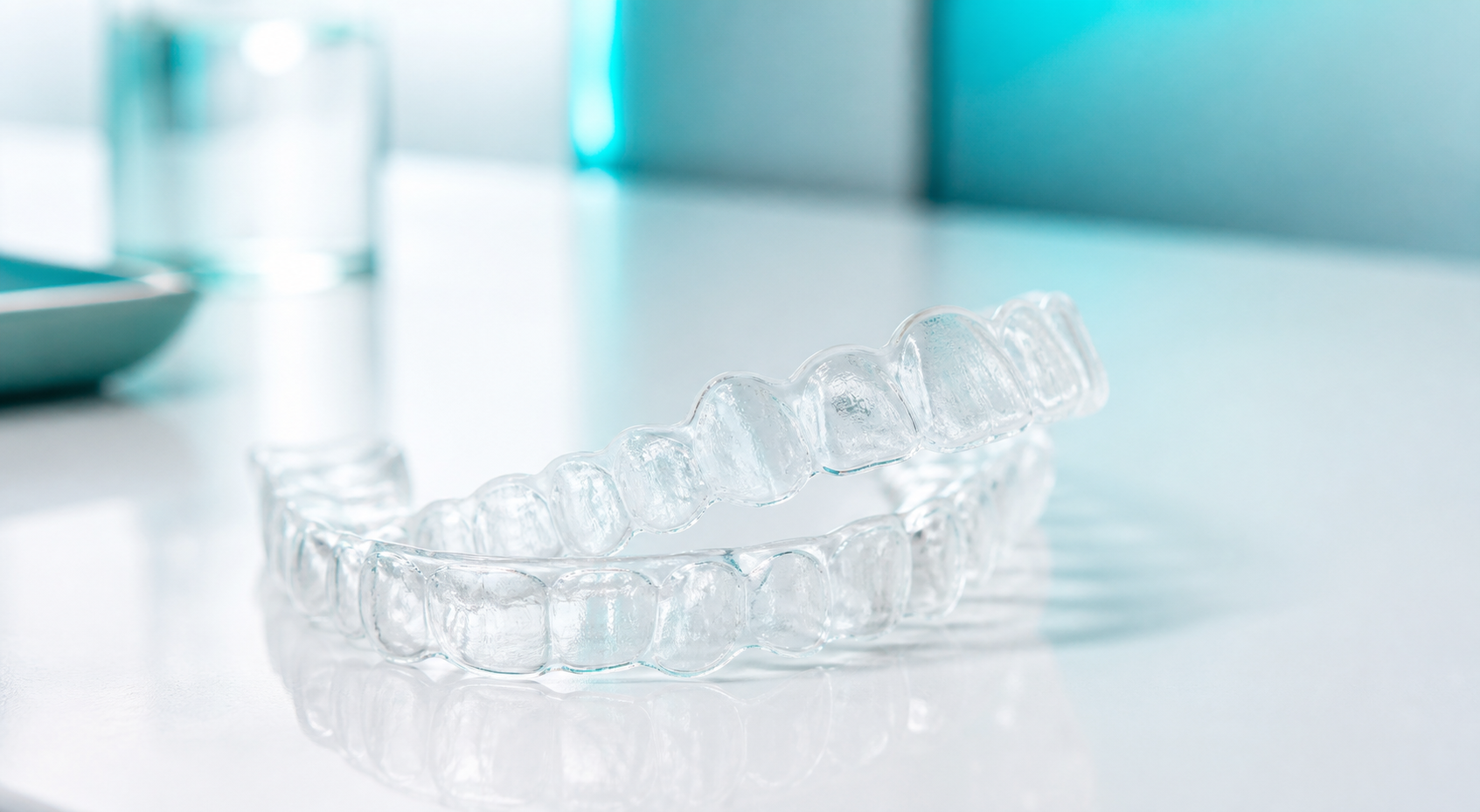
What is Invisalign?
Invisalign is a clear aligner system used to move teeth gradually with a planned series of removable trays. Each tray is custom-made to fit over the teeth and apply controlled pressure in specific directions.
Unlike braces, aligners do not use fixed brackets or arch wires. You remove them to eat, drink anything other than water, brush, and floss. The tradeoff is responsibility: aligners only work when they are worn as prescribed, often 20 to 22 hours a day.
In Nanaimo, Invisalign may be offered by general dentists with clear aligner training and by orthodontists. Mild crowding, small spacing, relapse after braces, and some cosmetic alignment goals may fit a general dental setting. Complex bite concerns, impacted teeth, major rotations, or jaw growth issues may call for orthodontic referral.
How Invisalign works: a practical timeline
Every case is individual, but most patients follow a similar sequence from first conversation to long-term retention. A clear timeline helps you understand where fees come from and what you are committing to.
Consultation and suitability screening
Your provider reviews your goals, health history, bite, gum health, jaw joints, and any past orthodontic treatment. Expect photos, an exam, and a discussion about whether aligners can meet your goals.
Records and digital scan
Many offices use an intraoral scanner instead of traditional impressions. X-rays may be needed to assess roots, bone levels, unerupted teeth, or pathology before tooth movement begins.
Treatment plan and preview
The provider reviews and adjusts the digital simulation. A good plan considers bite contacts, tooth angulation, gum limits, and whether the final position can be retained.
Aligner delivery and attachments
Small tooth-coloured attachments may be bonded to selected teeth so trays grip better. You will learn how to insert, remove, clean, and store the aligners.
Active wear and progress visits
Patients often change trays every one to two weeks. Checkups confirm that teeth are tracking, attachments are intact, and refinements are not needed early.
Refinement and retention
Many cases need a refinement set near the end. After active movement, retainers are essential because teeth naturally try to shift.
Who is a good candidate?
Invisalign can suit teens and adults with mild to moderate crowding, spacing, rotations, narrow smile concerns, or relapse after previous orthodontics. It can also help with some bite patterns.
Good candidates are realistic, consistent, and willing to return for monitoring. Treatment can stall if trays are left out too often, so patients unlikely to track wear time may do better with fixed braces.
Before tooth movement, cavities, gum disease, cracked teeth, failing restorations, or unstable bite problems should be addressed.
Best fit
Mild to moderate alignment needs, good oral health, and strong daily wear habits.
Use caution
Active gum disease, untreated decay, severe bite issues, or inconsistent appliance wear.
Teen factors
Maturity, sports, school routines, lost trays, and parent support all affect success.
How much does Invisalign cost in BC?
In British Columbia, many comprehensive Invisalign cases fall roughly between $4,000 and $8,000, although limited cosmetic movement may cost less and complex orthodontic treatment can cost more.
The final fee depends on complexity, aligner count, refinements, records, monitoring visits, retainers, and whether dental work is needed. Fees vary because BC dentists set their own fees.
Dental insurance may cover treatment only if your plan includes orthodontic benefits. Coverage may have a lifetime maximum, age restrictions, waiting periods, or scheduled reimbursement. Ask for a written estimate and confirm whether records, refinements, replacement trays, and retainers are included.
Invisalign vs braces
Both Invisalign and braces can produce excellent results when planned and monitored well. The better choice depends on the movement required, lifestyle, and compliance.
| Factor | Invisalign clear aligners | Traditional braces |
|---|---|---|
| Appearance | Very discreet, though attachments may show close up. | Visible brackets and wires; ceramic options are subtler. |
| Eating | Remove trays for meals; few food restrictions. | Sticky, hard, or crunchy foods may be limited. |
| Cleaning | Brush and floss normally; trays also need cleaning. | Brackets require careful brushing and floss tools. |
| Compliance | Depends on wearing trays most of the day. | Fixed appliances work continuously; elastics may matter. |
| Complexity | Strong for many mild to moderate cases. | Often preferred for complex movement or severe bites. |
| Appointments | May involve fewer adjustment-style visits. | Regular wire changes or adjustments are expected. |
Frequently asked questions
These answers are general education. Your provider should tailor advice to your health history.
How should I compare Invisalign Nanaimo, clear aligners Nanaimo BC, and Invisalign cost Nanaimo options?
Compare Invisalign Nanaimo options by asking who plans treatment, how progress is monitored, whether refinements and retainers are included, and how bite goals are handled. Clear aligners Nanaimo BC fees vary by complexity, records, treatment length, insurance, financing, and retention, so ask Nanaimo Smiles for a written Invisalign cost Nanaimo estimate before starting.
How much does Invisalign cost in Nanaimo, BC?
In Nanaimo and elsewhere in BC, many comprehensive Invisalign cases fall roughly between $4,000 and $8,000 before insurance, while limited movement may cost less and complex orthodontic treatment can cost more. Nanaimo Smiles can provide a consultation estimate that explains records, refinements, retainers, and payment timing.
Does Nanaimo Smiles offer free Invisalign consultations?
Nanaimo Smiles offers Invisalign consultations for patients comparing clear aligners, braces, oral health needs, and treatment timing. Consultation fees and promotions can change, so patients should ask the clinic directly whether a free Invisalign consultation is currently available.
How long does Invisalign treatment take in Nanaimo?
Many Invisalign cases take about 6 to 18 months, but timing depends on tooth movement, bite complexity, tray wear, refinements, and monitoring visits. Nanaimo Smiles can estimate timing after reviewing your teeth, gums, bite, and goals.
Is Invisalign covered by dental insurance in BC?
Some BC dental plans cover Invisalign as orthodontic treatment, but coverage varies by age limits, lifetime orthodontic maximums, waiting periods, and exclusions. Ask Nanaimo Smiles for an estimate and request a predetermination from your insurer before starting treatment.
What's the difference between Invisalign and braces for adults in Nanaimo?
Invisalign uses removable clear aligners that are discreet and easier to clean around, while braces use fixed brackets and wires that can be more predictable for certain complex movements. Adults in Nanaimo should compare appearance, cost, bite complexity, daily wear discipline, appointment timing, and retention before choosing.
Can teenagers get Invisalign at Nanaimo Smiles?
Some teenagers can get Invisalign if their teeth, bite, oral hygiene, maturity, and daily wear habits make clear aligners appropriate. Nanaimo Smiles can review teen suitability and explain whether Invisalign, braces, or orthodontic referral is the better option.
Finding an Invisalign provider in Nanaimo
Choose a provider who explains the cosmetic goal and bite goal. You should leave understanding your diagnosis, planned movements, timeline, limitations, and retention plan.
If you are comparing local options, Nanaimo Smiles offers Invisalign consultations and can help patients understand whether clear aligners fit their goals, oral health, and schedule.
Useful questions include: Who modifies the digital plan? How often is progress monitored? Are refinements included? What retainers are provided? What if teeth do not track? What could cost extra?
The right provider is not simply the lowest quote. It is the clinician who explains clearly, identifies limitations early, monitors carefully, and protects the result with retention.